Scaffold Spanners: Sizes, Types & Why Scaffolders Use 7/16 Whitworth
Few tools are more closely associated with a scaffolder than the scaffold spanner. It looks simple, gets thrown into tool belts, dragged through every kind of weather and can tighten hundreds of fittings during a shift — but its unusual 7/16 Whitworth size often confuses anyone outside the trade.
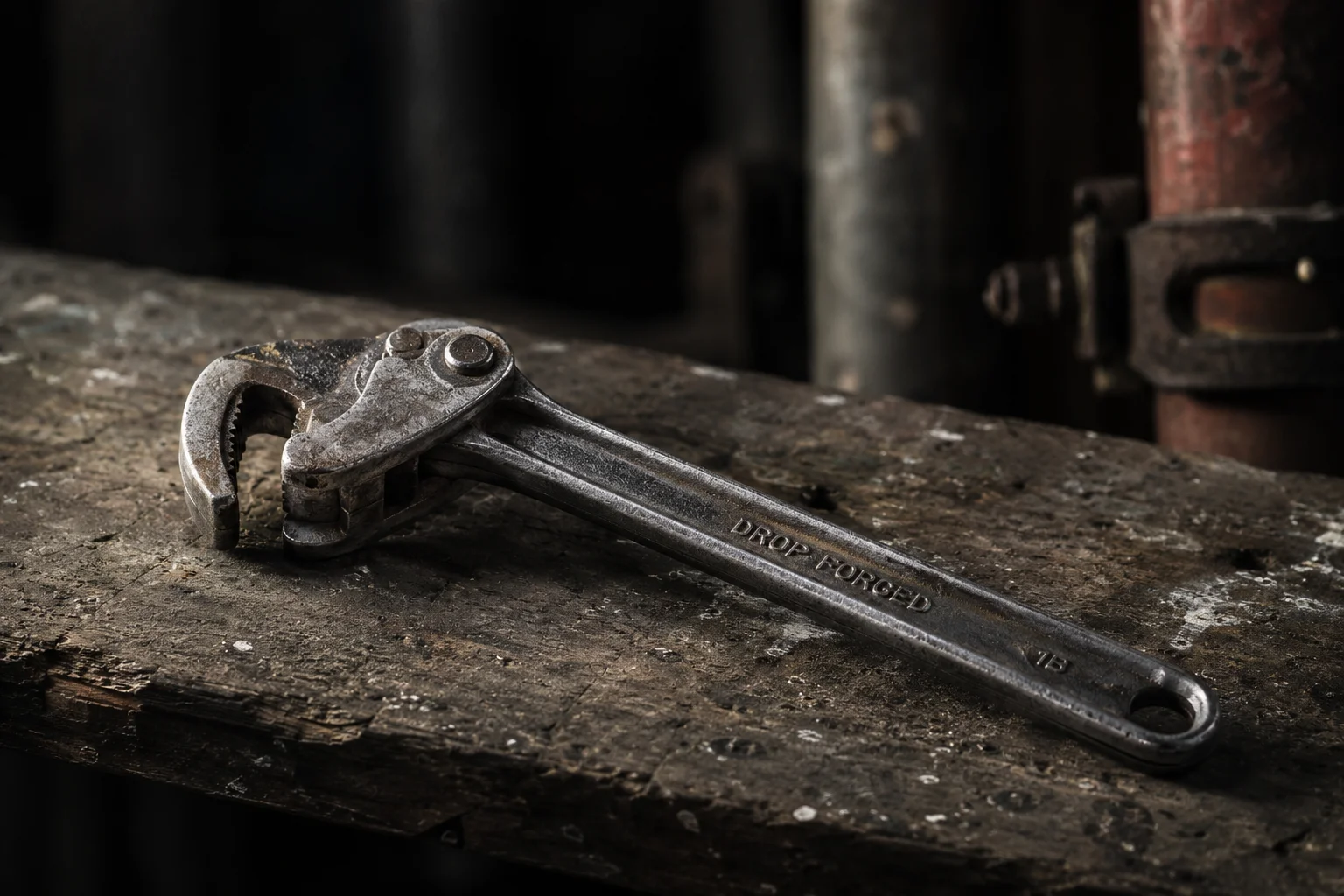
The traditional UK version has a 7/16-inch Whitworth socket, normally with a swivelling head and a steel handle.
Despite the name, 7/16 does not mean the nut is only 7/16 of an inch across. It refers to the Whitworth fastener size. The common scaffold fitting presents an approximately 21mm hexagonal nut to the spanner.
In practical terms, it is the tool that allows a tube-and-fitting scaffolder to turn a pile of 48.3mm scaffold tube and couplers into a temporary structure.
7/16W swivel-head spanner
Modern examples are commonly made from hardened or chrome-vanadium steel, with a socket capable of rotating through approximately 180 degrees. The moving head makes it much quicker to work around tubes and fittings where there is limited space for a conventional fixed spanner.
What size is a scaffold spanner?
If you walk into a UK scaffold supplier and ask for a standard scaffold spanner, the size you are most likely to encounter is 7/16 Whitworth.
This catches people out because Whitworth sizing does not describe the width across the flats of the nut in the same way people often expect from modern metric sockets.
The traditional Whitworth size commonly associated with UK scaffold fittings.
The approximate across-flats dimension encountered on the common scaffold fitting.
Do not confuse 7/16 Whitworth with a 7/16-inch AF socket. They are completely different sizes. A scaffold spanner marked 7/16W is intended for the corresponding Whitworth scaffold fitting.
Why do scaffolders still use Whitworth?
It seems unusual in an industry where most new equipment is specified in metric dimensions.
The answer is largely historical.
Whitworth is one of Britain's oldest standardised screw-thread systems. Scaffold fittings developed around traditional British engineering standards and Whitworth fasteners became deeply established within the tube-and-fitting scaffold industry.
The surrounding scaffold has evolved significantly, but the familiar scaffold-fitting nut and the spanner used to turn it have remained.
A modern scaffolder can be using laser-measured drawings, digital TG20 documentation and cloud-based job software — while tightening the scaffold with a tool based around a 19th-century British thread system.
What does the scaffold spanner actually tighten?
Traditional tube-and-fitting scaffolding uses couplers to connect scaffold tubes.
Common examples include:
- right-angle couplers;
- swivel couplers;
- sleeve couplers;
- putlog couplers;
- joint pins and related fittings; and
- specialist couplers.
Screw-operated couplers clamp around the tube as their nut is tightened. The scaffold spanner gives the operative the leverage required to tighten and release that fitting repeatedly.
What types of scaffold spanner can you buy?
Single-ended 7/16W scaffold spanner
Probably the most recognisable traditional UK version. One 7/16 Whitworth socket sits in a swivelling head attached to the handle.
Double-ended scaffold spanner
Common double-ended versions provide both 7/16W and 1/2W sockets, allowing the same tool to deal with more than one fitting size.
Bi-hex scaffold spanner
A bi-hex or 12-point socket provides more engagement positions around the nut than a simple six-sided socket, which can be useful where the spanner has limited room to move.
Ratchet scaffold spanner
Ratchet versions allow the nut to be worked without repeatedly removing and repositioning the socket. They can be particularly useful where access around the fitting is restricted.
Tether-ready scaffold spanner
Tools intended for work at height may incorporate a dedicated tether attachment point so the spanner can be connected to an appropriate tool-lanyard system.
7/16W vs 21mm scaffold spanner — are they the same thing?
In scaffold-tool listings you will sometimes see the same type of tool described as:
- 7/16W scaffold spanner;
- 7/16 Whitworth scaffold spanner;
- 21mm scaffold spanner;
- scaffolding box spanner;
- scaffold wrench; or
- scaffolder's spinner.
These descriptions can refer to tools intended to engage the same common scaffold-fitting nut, but always check the actual manufacturer's specification rather than buying solely from the product title.
| Description | What it means | Typical use |
|---|---|---|
| 7/16W | 7/16 Whitworth fastener designation | Common UK scaffold fittings |
| 21mm | Approximate socket across-flats dimension | Often used as a modern size description |
| 1/2W | Larger Whitworth fitting size | Found on some scaffold fittings |
| 7/16W + 1/2W | Double-ended tool | Two fitting sizes from one spanner |
How tight should scaffold fittings be?
A scaffold spanner is a tightening tool; it is not a torque-measuring instrument.
EN 74 standards covering scaffold couplers use 50Nm tightening torque for screw-operated couplers during their specified testing procedures.
Manufacturers can also specify their own installation and maintenance requirements, so those instructions and the applicable scaffold specification should be followed.
More force is not automatically better. Extending a scaffold spanner with an improvised bar or using inappropriate powered tools can create forces the fitting was not intended to receive. Couplers should be installed in accordance with their manufacturer's instructions and the applicable scaffold system or design.
Is a scaffold spanner the same as a torque wrench?
No.
A scaffold spanner provides leverage for tightening or loosening a fitting.
A calibrated torque wrench allows a specific tightening torque to be applied or checked.
They therefore perform related but different jobs.
Should a scaffold spanner be tethered when working at height?
A scaffold spanner is small compared with the tubes and boards around it, but dropping a steel tool from height can cause serious injury.
HSE guidance requires precautions against falling objects when working at height and specifically says that objects should be prevented from falling where they could cause injury.
Depending on the risk assessment and working method, a suitable tool-tether system can form part of those controls.
Purpose-made scaffold spanners are available with dedicated tether attachment points rather than relying on an improvised connection.
What should you look for when buying a scaffold spanner?
How much does a scaffold spanner cost?
Scaffold spanners are relatively inexpensive compared with most of the equipment a scaffolding company carries.
At the time of researching this guide in August 2026, conventional 7/16W scaffold spanners were widely available in the UK at around £7–£25 depending on manufacturer, material and design.
More specialist tethered, ratcheting or premium tools can cost considerably more.
For example, current mainstream listings include traditional 7/16W swivel-head spanners around the £10–£25 mark, while specialist tether-ready tools can exceed £60.
Looking for scaffold tools, fittings or equipment?
Scaff Exchange is being built around the equipment scaffolders actually use — from everyday tools such as scaffold spanners through to fittings, boards, tube, safety equipment, vehicles and complete scaffold packages.
Compare kit from suppliers in one place or find equipment being offered by other businesses in the scaffolding industry.
Do scaffold spanners wear out?
Yes.
A professional scaffolder can use the same tool thousands of times. The socket, pivot and handle therefore need occasional inspection.
Look for:
- rounded or badly worn socket faces;
- cracking;
- bent handles;
- excessive movement in the swivel joint;
- heavy corrosion;
- damaged tether attachment points; and
- any modification to the original tool.
A worn socket can slip more easily from the fitting, damaging both the nut and potentially the user's hands.
Is the scaffold spanner really the most important scaffolder's tool?
It is certainly one of the most recognisable.
A tube-and-fitting scaffolder may also carry or use:
- a spirit level;
- tape measure;
- hammer;
- podger or alignment tools;
- tool belt and frog;
- lanyards;
- ratchet tools;
- torque equipment where required; and
- appropriate PPE and fall-protection equipment.
But on a traditional tube-and-fitting job, few tools spend more time in a scaffolder's hand than the scaffold spanner.
Scaffold spanner FAQs
What size spanner do scaffolders use?
The traditional common UK scaffold spanner is 7/16 Whitworth, generally corresponding to an approximately 21mm scaffold fitting nut.
Is a scaffold spanner 21mm?
Many common scaffold-fitting nuts are approximately 21mm across the flats, and some suppliers therefore describe scaffold tools as 21mm. Traditional scaffold spanners are commonly specified as 7/16 Whitworth. Check the tool and fitting specification before use.
What does 7/16W mean on a scaffold spanner?
The W means Whitworth. The 7/16 figure refers to the Whitworth fastener size rather than saying that the nut itself measures 7/16 inch across the flats.
Why does a scaffold spanner have a swivel head?
The swivelling head allows the handle to change angle relative to the socket, making it easier to work around scaffold tubes and fittings where space is restricted.
What is a double-ended scaffold spanner?
A common double-ended scaffold spanner has a 7/16 Whitworth socket at one end and a 1/2 Whitworth socket at the other, allowing one tool to work with two fitting sizes.
How tight should a scaffold coupler be?
EN 74 testing procedures use a 50Nm tightening torque for screw-operated scaffold couplers. Actual installation should follow the coupler manufacturer's instructions and relevant scaffold specification. A conventional scaffold spanner does not itself measure torque.
Can you use an ordinary 21mm spanner on scaffolding?
The correct tool should suit the actual scaffold fitting. Purpose-made scaffold spanners are designed around repeated work with scaffold fittings and commonly use a swivel head that makes them easier to operate around tubes.
What is a tethered scaffold spanner?
A tether-ready scaffold spanner incorporates a suitable attachment point for connection to an appropriate tool-lanyard system. Tool tethering may form part of controls used to reduce the risk from falling objects when working at height.
Where can I buy scaffold spanners and tools?
Scaffold spanners are available from specialist scaffold suppliers and trade-tool retailers. Scaff Exchange also brings scaffolding tools, equipment and other industry supplies together for scaffold businesses to browse.
Current product specifications were checked against UK scaffold and tool suppliers, while technical information concerning scaffold coupler tightening and work-at-height risks has been checked against current EN 74 and HSE information.